Designing Research That Could Handle Both Answers
The first step was designing a research approach that was genuinely capable of returning either conclusion. This sounds obvious, but it matters. Research that is designed around a hypothesis tends to confirm it. Research designed around a question tends to answer it.
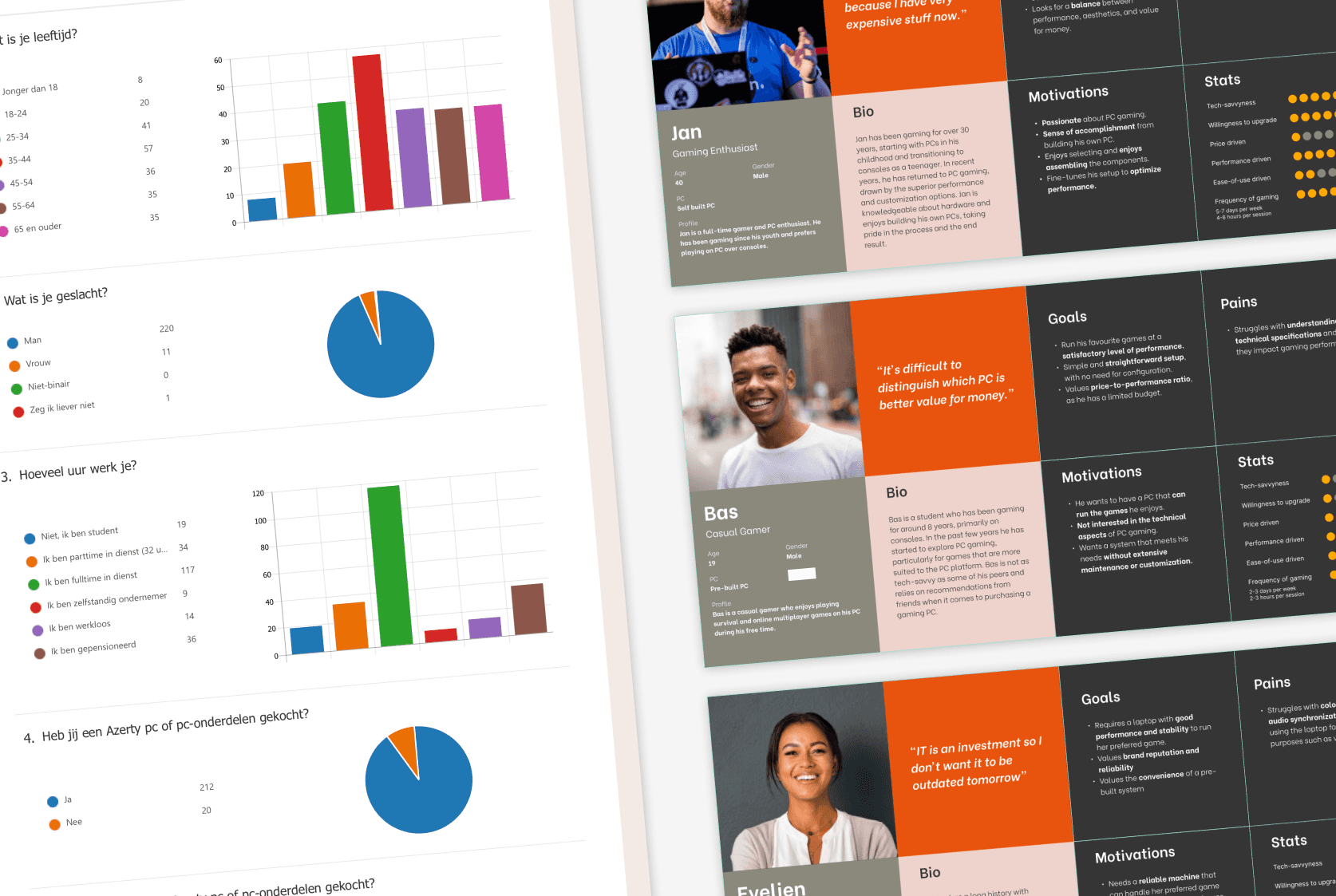
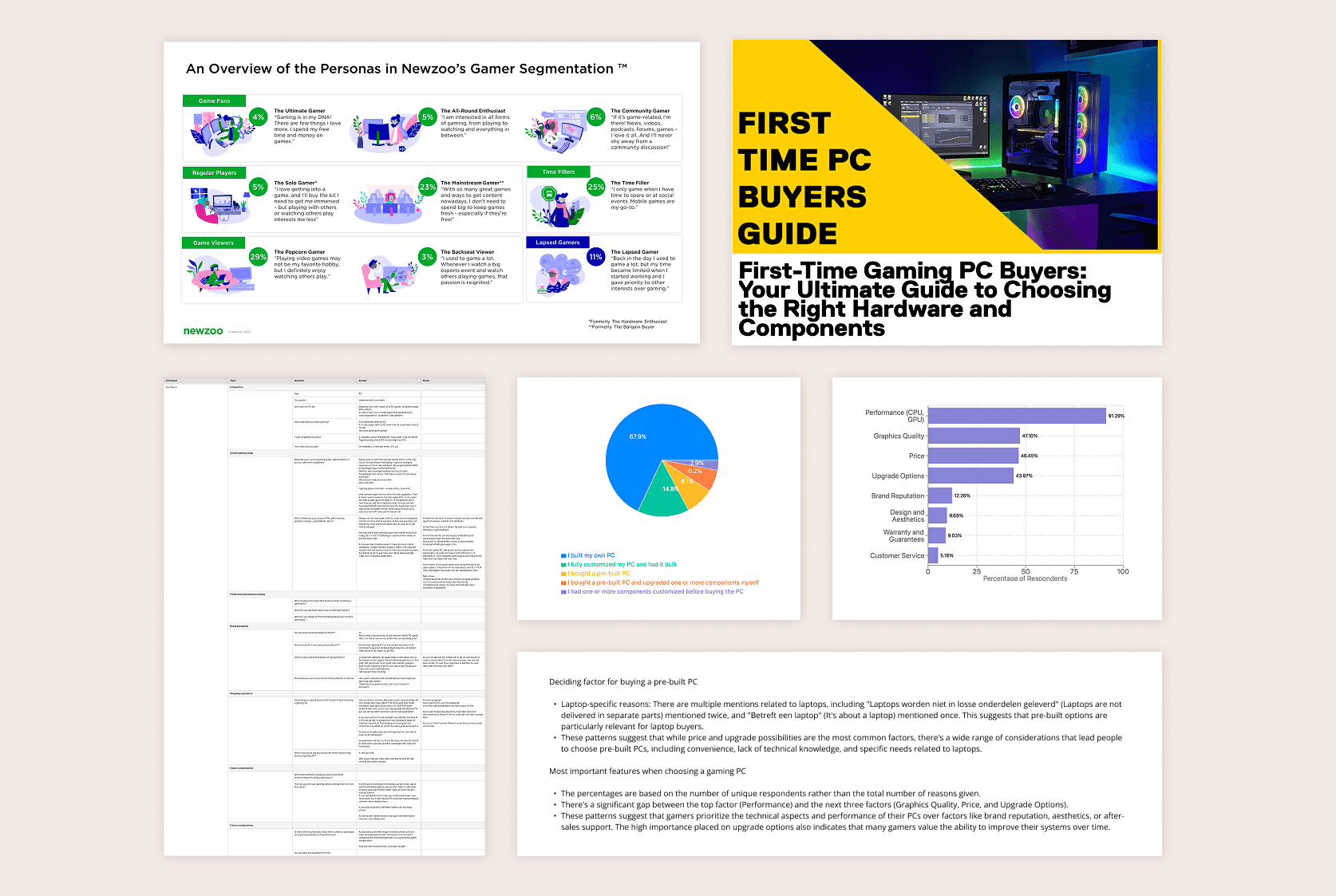
I developed a plan that combined quantitative and qualitative methods deliberately, using each to do what it does best. Quantitative surveys captured broad market trends, demographic patterns, and behavioural data across both the existing customer base and potential new audience segments. In-depth qualitative interviews then went underneath the numbers, uncovering the motivations, perceptions, and expectations that surveys can identify but never fully explain.
The two approaches were designed to pressure-test each other. Where the numbers pointed in a direction, the interviews explained why. Where the interviews surfaced something unexpected, the survey data could confirm whether it was a pattern or an outlier.
What The Research Found
The existing customer base and the high-end gaming audience were not the same people. They didn't share the same values, the same purchasing motivations, or the same relationship with technology. Selling a premium gaming sub-brand through the lens of the existing brand would have meant speaking to the wrong room.
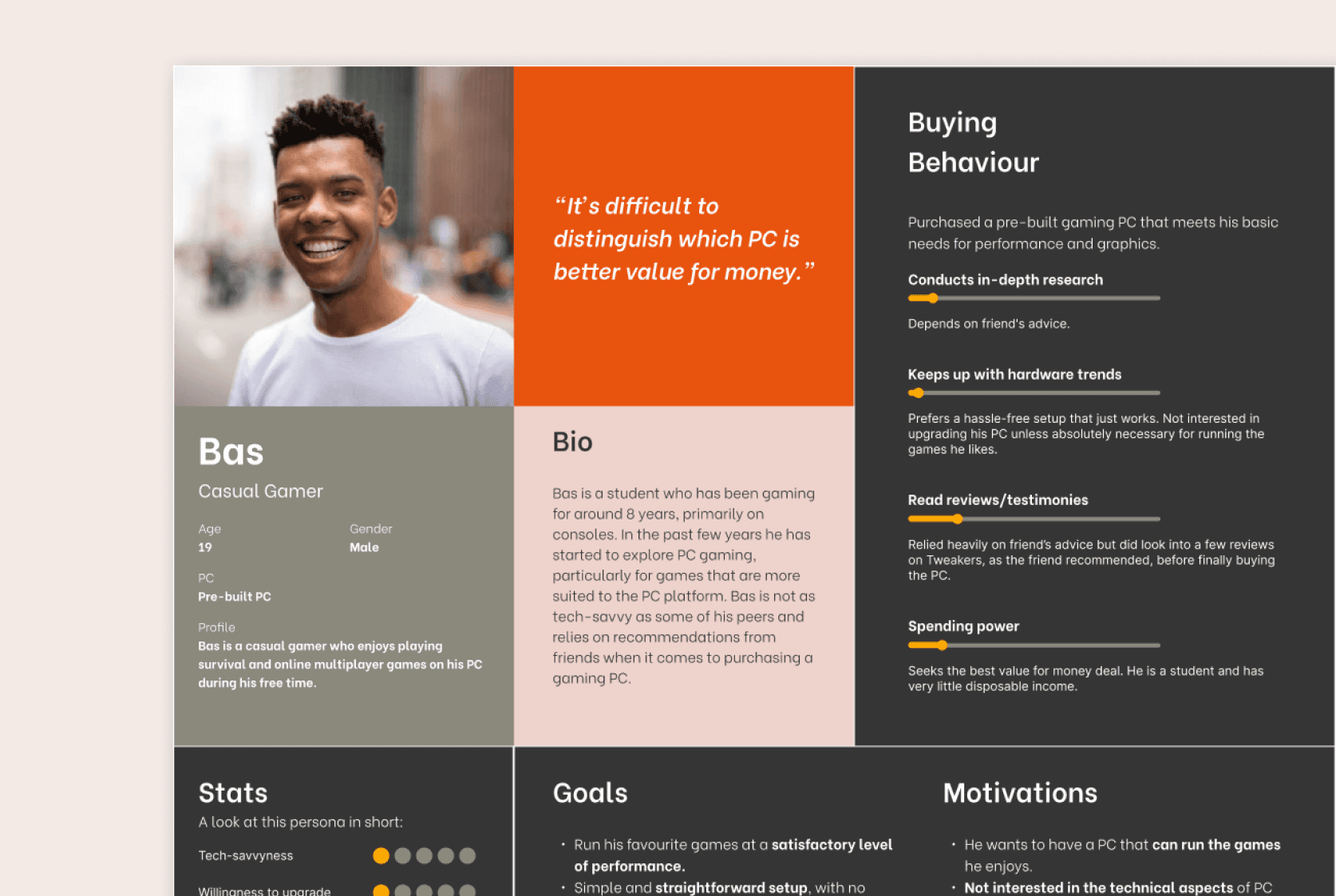
The data pointed clearly toward a previously untapped audience segment, one with distinct behavioural patterns, specific expectations around performance and identity, and a willingness to invest significantly in the right product. The personas developed from this research didn't just describe who these people were. They explained what they needed to hear, and from whom, before they would buy.
The Outcome
The conclusion was presented to the client: the existing customer base was not the target audience for the new sub-brand, and pursuing them as such would have been a costly misalignment of brand and audience.
The client didn't push back. The research had made the answer feel inevitable. They acted on it immediately, commissioning follow-on work with our visual designers to define the identity of the new sub-brand around the audience the research had uncovered.
That follow-on brief is what a well-founded research conclusion looks like in practice. Not a report that gets filed away, but a decision that gets made.
What This Taught Me
There is no wrong answer in research, only incomplete questions. A conclusion of 'no' is not a setback. It is evidence, and evidence is always more valuable than assumption. The client didn't need us to confirm what they hoped. They needed us to find out what was true. That is a different brief, and it requires a different kind of courage to deliver.