Starting With the Numbers
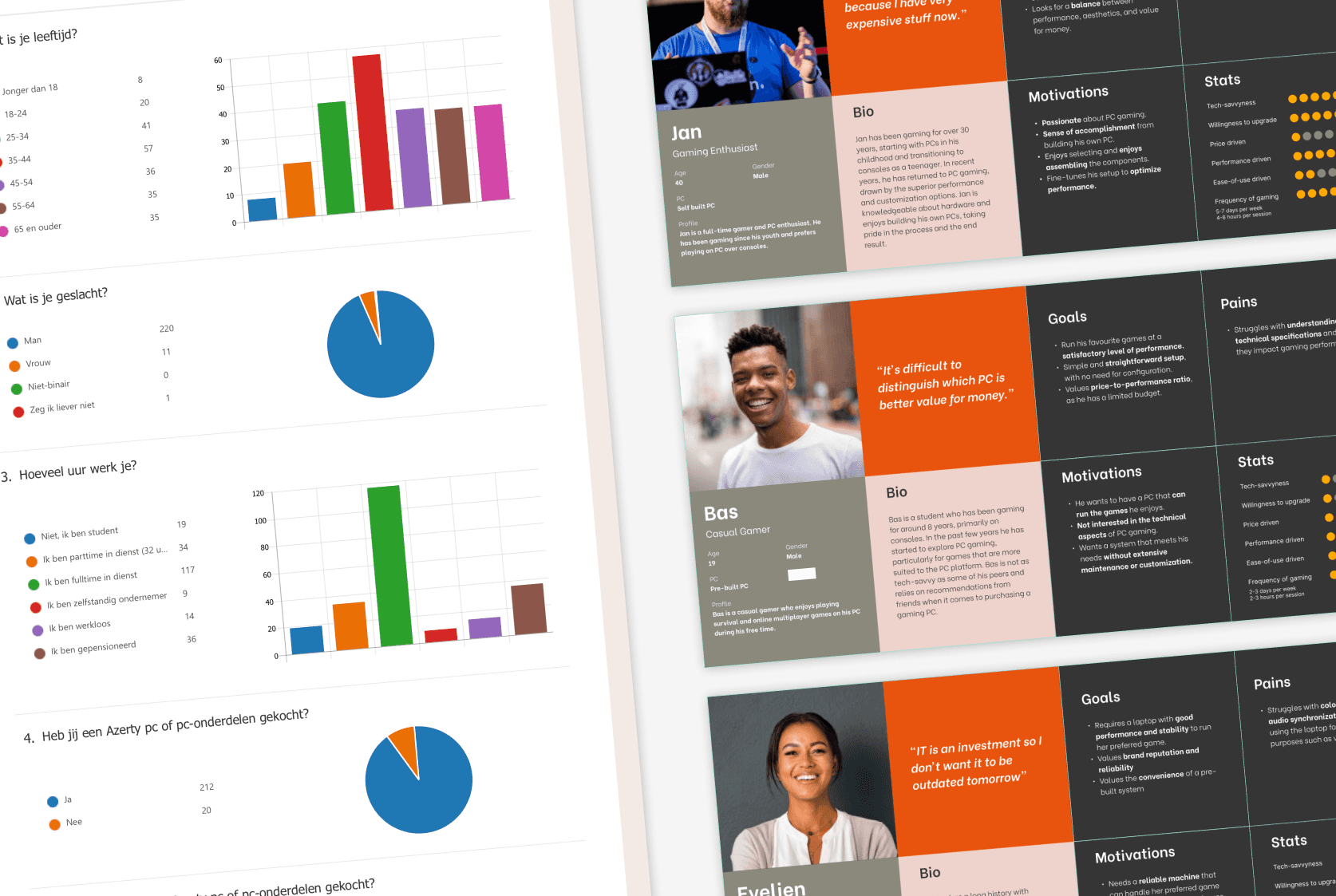
The first step was understanding what the data was already telling us. I set up a GA4 funnel analysis to map user behaviour across the journey, identifying exactly where users were dropping out and at what rate. Drop-off data alone isn't enough, though. Without context, a 60% drop-off at a certain point in the funnel sounds alarming. With the right benchmarks, it might be entirely expected.
So alongside the funnel analysis, I researched industry benchmarks across B2C and B2B eCommerce, specifically within the cycling and premium sports niche, to establish what realistic, attainable KPIs actually looked like for a brand of this type. This gave us something most agencies skip: the ability to tell a client not just what is happening, but whether it is a problem worth solving, and how much improvement is genuinely achievable.
Building the Framework
Having defined the KPIs with the client and based on the research, the next challenge was creating a structure that could organise improvement opportunities consistently, across teams, and over time. Not just for this sprint, but for every sprint that followed.
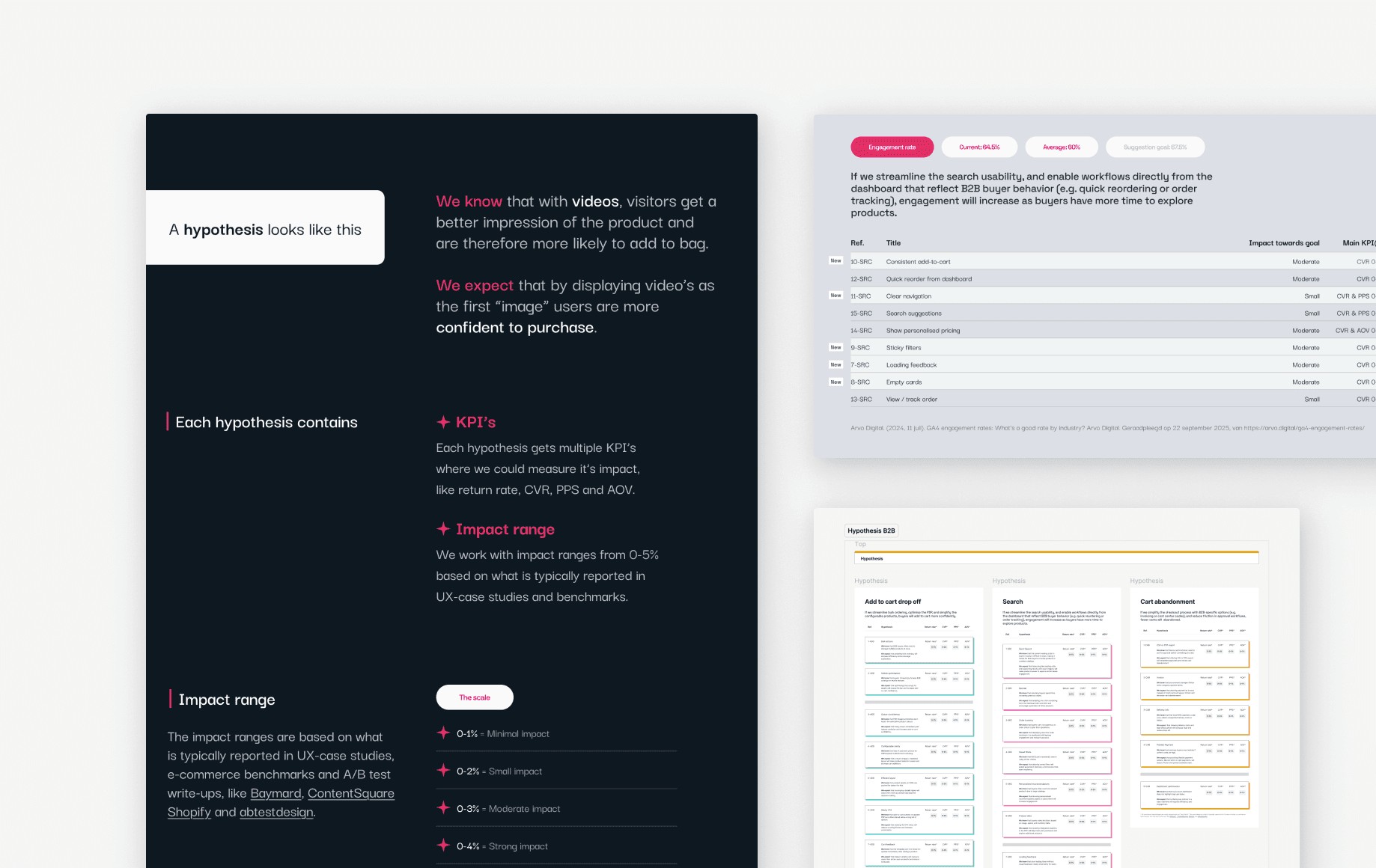
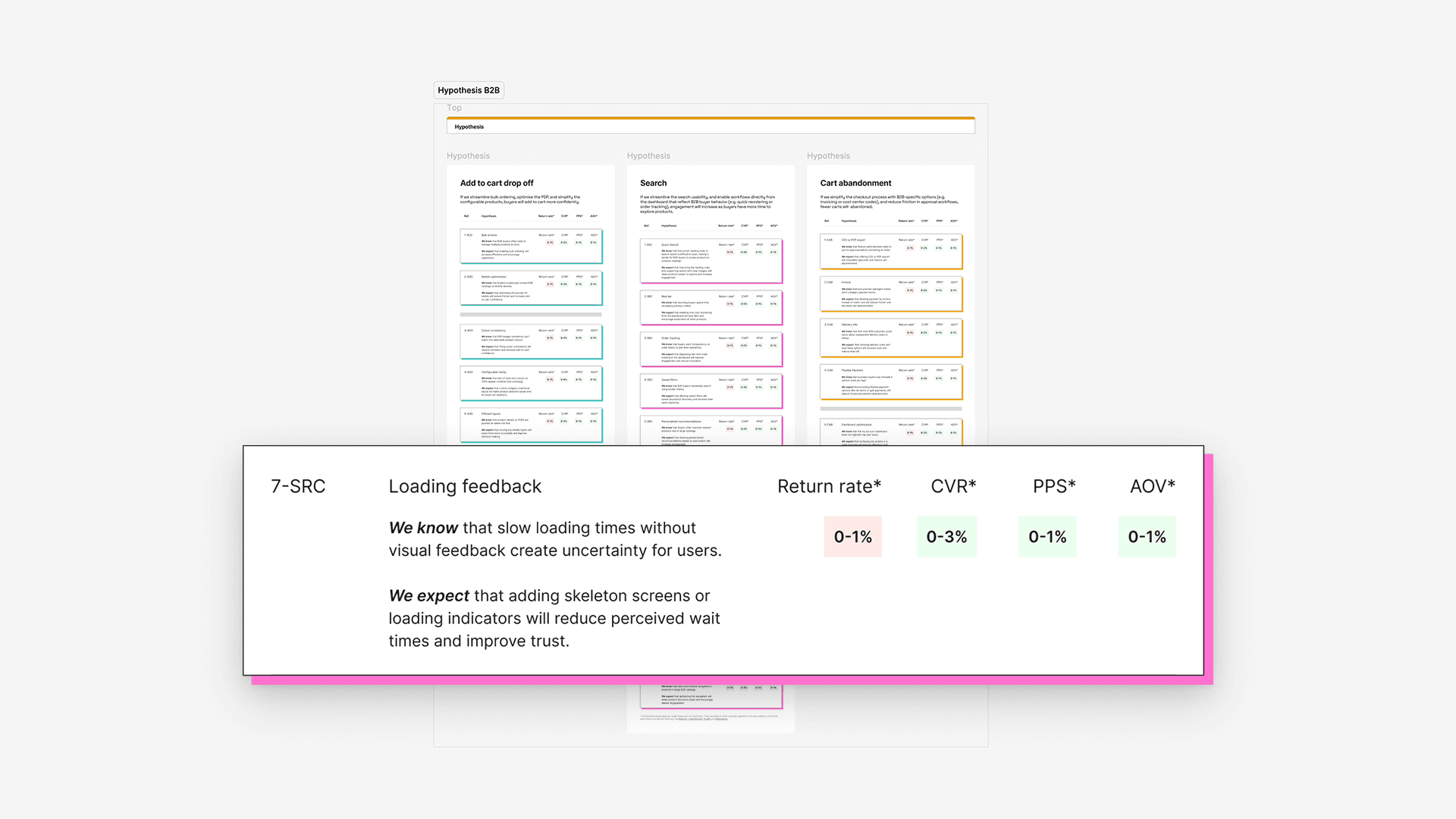
I developed a hypothesis-led framework in which every proposed improvement had to earn its place. Each hypothesis followed a two-part format:
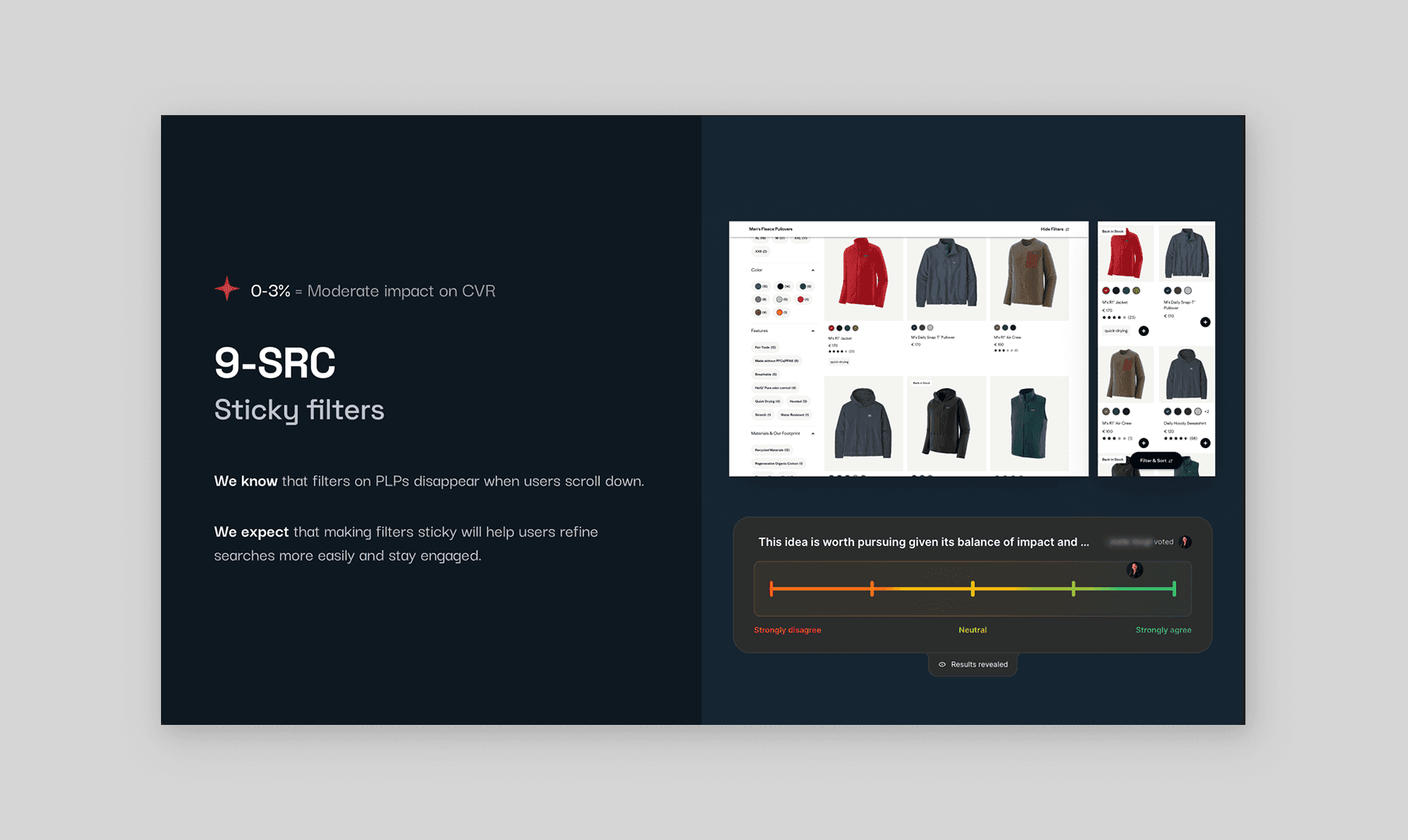
We know that... rooting the observation in evidence, whether analytics, session data, benchmarks, or user research.
We expect that... describing the specific intervention and the measurable outcome anticipated, naming the KPI it was expected to move and in which direction.
Each hypothesis was also assigned an impact range, rather than a point estimate, based on published UX benchmarks from sources including Baymard, ContentSquare and A/B test repositories. Ranges reflect the inherent uncertainty at hypothesis stage honestly. A scale from minimal to very strong impact gave every proposed change a clear weight before a single pixel was moved.
From Framework to Priorities
Twenty-three hypotheses were written in total. Rather than presenting them as a list for the client to approve or reject, a collaborative session was facilitated in which the hypotheses were evaluated and placed on an effort versus impact matrix together. This is a critical distinction: the client didn't receive a recommendation. They participated in building one.
Seven winning hypotheses were identified for immediate prioritisation and planned into the following development sprints. The remaining sixteen were translated into Jira tickets and placed on the backlog in a considered order, ready to be picked up systematically rather than reactively.
The Outcome
The hypotheses are currently being implemented in order of priority. What was delivered immediately, and what the client valued most, was the foundation itself. For the first time, every improvement on the roadmap had a clear rationale, a defined success condition, and a realistic expectation of impact attached to it. Stakeholders across departments were working from the same evidence, the same terminology, and the same criteria.
The framework didn't just organise the backlog. It changed how the team talked about UX work.
What This Taught Me
The most valuable thing a UX designer can bring to a client isn't a better design. It's a better way of deciding which designs are worth making. When you build the right foundation, the work that follows is faster, more confident, and much harder to argue with.